


Severe Jellyfish Sting in Singapore Waters – What You Should Know
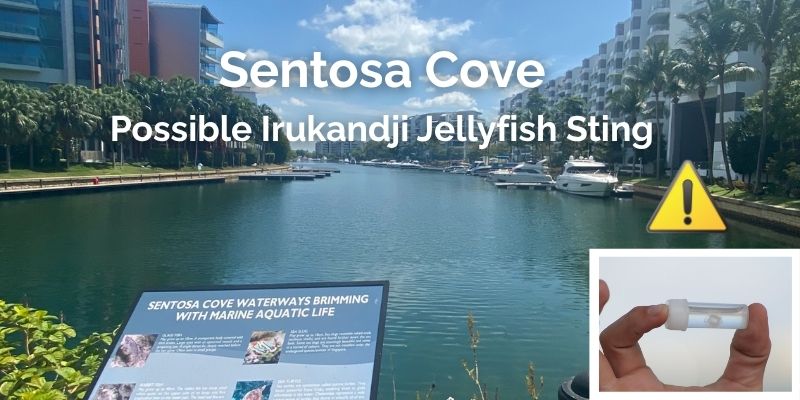
We want to bring attention to a serious marine safety incident that occurred recently in Sentosa Cove, Singapore.
A resident boater, was conducting a quick underwater repair on his vessel moored in the canal behind the condo. Moments after entering the water, he experienced an excruciating sting. The pain escalated so rapidly that he was rushed to the hospital, admitted to ICU, and placed under sedation and a morphine infusion. Doctors believe it may have been a sting from the Irukandji jellyfish, one of the most venomous jellyfish species in the world.
While Irukandji are more commonly found in northern Australia, they have been detected in warm, tropical waters across the Indo-Pacific, including parts of Southeast Asia. The exact species that stung the resident may never be known, but the incident is a sobering reminder that tropical waters around Singapore can carry unseen risks, especially in enclosed or stagnant areas like canals.
Understanding the Risk in Singapore’s Waters
Singapore’s marine environment—especially in marinas, canals, and coastal zones—hosts a variety of jellyfish, most of which are harmless. However, climate change, warming waters, shifting current patterns and ship ballast are expanding the reach of more dangerous species like:
- Irukandji jellyfish (Carukia barnesi)
- Box jellyfish (Chironex fleckeri)
- Morbakka fenneri (Moreton Bay stinger)
These are transparent, tiny, and often undetectable until it’s too late.
What To Do If Stung – First Aid Steps
For Box & Irukandji Stings (Life-threatening):
- Get out of the water immediately.
- Call 995 (Singapore Civil Defence Force) for emergency medical help.
- Douse the sting area with vinegar—it helps neutralize stinging cells.
- Do NOT use freshwater or rub the area.
- Monitor for symptoms:
- Intense back or chest pain
- Nausea, vomiting
- Sweating or agitation
- Difficulty breathing or high heart rate
If you do not have vinegar, rinse with seawater and seek medical attention immediately.
Where to Report the Incident
If you encounter or suspect a venomous jellyfish sighting or sting:
- Report it to NParks via their OneService app
- Notify Sentosa Cove, PUB or URA if it occurred in canal waters or mooring basins
- Inform your marina operator or condo management
- For educational tracking, you may also inform St. John Island National Marine Laboratory at marine@nus.edu.sg
Precautions Around Local Waters
- Wear rash guards or wetsuits for underwater tasks
- Always carry vinegar in your boat’s first aid kit
- Watch for signage or jellyfish warnings at coastal areas and parks
The Good News
The resident is thankfully on the road to full recovery, but this close call is a critical reminder: Singapore’s waters may look calm, but invisible marine hazards can still pose real danger.
We hope this information helps others stay safe, informed, and prepared. If you have concerns or your own experience to share, please reach out—we’re committed to raising awareness for the boating and watersports community.